Your Next Campaign Manager Is an API Call — News Round Up: 05/25-05/31
The marketing industry spent last week pretending upfront negotiations and programmatic bids still matter. Meanwhile, OpenAI turned on cost-per-action ads inside ChatGPT, Measured let marketers chat with their incrementality data via Claude, and Tim Berners-Lee showed up at an IAB summit to tell everyone the agentic web is coming whether they’re ready or not. The disconnect between what the industry talks about and what’s actually happening has never been wider. Here’s what you missed.
The OpenAI Ad Blitz: CPA Inside ChatGPT Changes Everything
The biggest news of the week — and probably the month — is that OpenAI turned on cost-per-action ads inside ChatGPT. This isn’t a banner ad experiment. This is the first real signal that the world’s fastest-growing consumer AI platform is embracing performance advertising as a business model. CPA means OpenAI is betting that it can drive measurable outcomes — purchases, signups, leads — from conversational AI interactions. That’s a fundamentally different value proposition than anything Google, Meta, or Amazon offers.
If you think this is just another search ad competitor, you’re not paying attention. ChatGPT doesn’t serve ten blue links. It has a conversation with a user, builds context, and can recommend a product within a natural flow. The CPA model means advertisers only pay when that recommendation converts. The implications for retail media are immediate, which is why OpenAI is already working with Skai to bring retail and commerce advertisers into ChatGPT. This is the Criteo deal on steroids — giving advertisers a route into ChatGPT inventory through infrastructure they already use, bypassing the need to learn an entirely new platform.
Measurement Gets an AI Interface: The MCP Era Begins
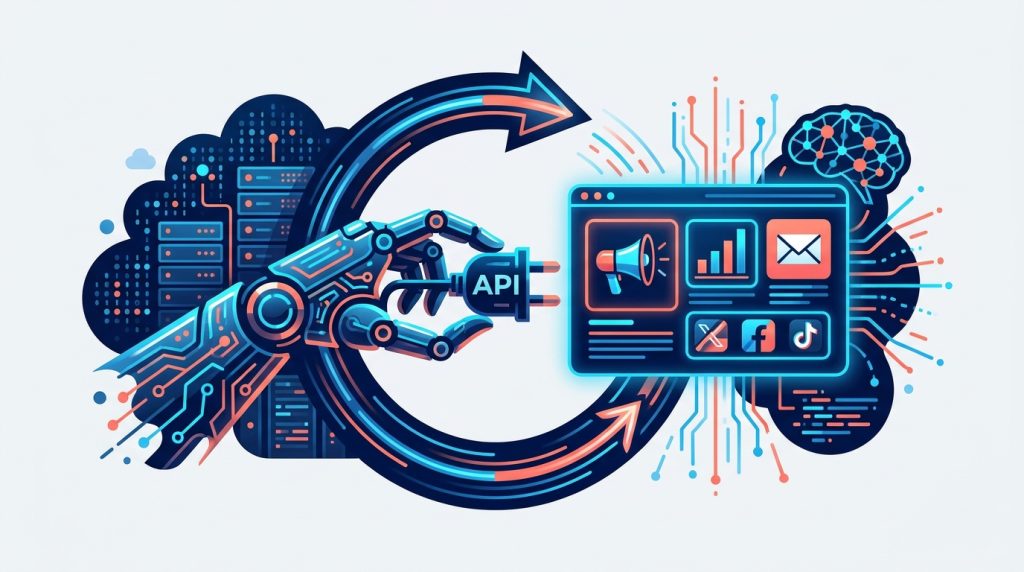
Media measurement provider Measured quietly launched something that should terrify every dashboard vendor: a Model Context Protocol (MCP) server that lets marketers ask ChatGPT, Claude, and Gemini “where should I spend my next dollar?” Instead of logging into a portal, filtering a report, and exporting a PDF, marketers can just ask. The AI interprets the question, queries the incrementality data, and responds in natural language.
This is the direction everything is heading. MCP is the protocol layer that connects AI agents to real business data, and the AdExchanger piece on “From Open Internet to Open Agent” nails why it matters: the architecture buyers were promised — transparent, interoperable, with clean data pipes — is finally here, just not in the way anyone expected. It’s not a new DSP. It’s an agent layer that sits on top of everything.
Meanwhile, the measurement foundation is still shaky. A Washington Supreme Court case (Baker v. Seattle Children’s Hospital) is testing whether basic ad pixels violate 1960s-era wiretapping laws. The IAB is panicking because if the court rules that Meta Pixel transmissions constitute illegal wiretapping, the entire measurement infrastructure of digital advertising collapses. Pixels — the fundamental unit of web measurement — could become legally risky overnight. And just as MCP-powered AI agents start needing cleaner, more reliable data, the legal ground underneath that data is shifting.
The Upfronts Are a Distraction While the Ground Moves Underneath
The TV upfront season is in full swing, and Adweek’s overview of the key trends reads like a checklist of things that are changing slower than they need to. But the real action is in FAST channels. AdExchanger’s CTV roundup makes the case that FAST content — the stuff with lower production value, smaller audiences, and less brand safety theater — is where actual ad innovation is happening. New formats, new targeting tools, new programmatic buying methods. The “premium” inventory is too locked down by legacy deals to experiment. FAST is the sandbox.
Dentsu is making its upfront pitch around agentic media buying, with Beth Ann Kaminkow and Will Swayne talking about adapting AI into their processes. Every holding company is telling this story now. The question isn’t whether agencies will use AI agents — it’s whether those agents bypass the agencies entirely. When an advertiser can ask ChatGPT “where should I spend my next dollar?” and get a data-backed answer that plugs directly into Skai or The Trade Desk, the role of the media agency shifts from planner to validator. That’s a thinner margin business.
Even Universal Ads is trying to crack the small-business TV market, but Digiday’s “pizza test” point is dead-on: until a local pizzeria can buy TV ads as easily as Facebook ads, linear TV’s share shift to digital will continue. The upfront is a relic of scarcity. The agentic web doesn’t do annual commitments.
The Programmatic Pageview Is Dead. Now What?
AdExchanger’s big story of the week is titled “The End of the Programmatic Pageview” and it’s worth reading in full. The confluence of TV piracy siphoning sports viewership, Vox Media and BuzzFeed finding new owners, and publishers pivoting away from display-dependent models adds up to a structural shift. The pageview was the unit of currency for two decades of digital media. What replaces it? Likely attention time, or outcomes — neither of which fit neatly into an open exchange bid request.
Tim Berners-Lee, appearing at the IAB Tech Lab Summit, urged social platforms to stop building addictive products and embrace an agentic future that values individuals over outcomes. It’s a nice sentiment, but the irony is that the agentic web he’s describing — where AI agents act on behalf of users — could accelerate the very disintermediation that terrifies publishers. If my AI agent visits your site, extracts the content, and never renders an ad, what exactly are you selling?
Publishers are already hedging. Digiday reports that publishers are quietly cutting six-figure AI licensing deals via Snowflake’s RAG pipeline. Axios is betting that AI can make local news pay, one market at a time, with OpenAI footing part of the bill. The licensing model — where AI companies pay publishers for training data — is becoming a real revenue line. But it’s a bridge to somewhere, not a destination. Licensing data to the same AI platforms that are replacing your traffic isn’t a sustainable strategy. It’s a way to monetize the decline.
The Agentic Web Is Eating Advertising
Pull all of this together and the pattern is unmistakable: the campaign-centric model of advertising — plan, buy, execute, measure, repeat — is being replaced by an agent-centric model where AI handles allocation in real time, measurement happens in natural language, and the concept of a “campaign” starts to feel as outdated as a “media plan” faxed to a publisher.
OpenAI’s CPA ads are the first major test of whether conversational AI can be a performance channel. Measured’s MCP server is a glimpse of how marketers will interact with data in a year. The upfronts are running on fumes. The programmatic pageview is terminal. And the legal foundation of digital measurement is being challenged in court.
The smartest play right now isn’t optimizing your DSP strategy or negotiating better CPMs. It’s figuring out how your brand gets recommended when a consumer asks an AI agent “what’s the best X for Y?” Because that’s where the battle for attention — and the battle for the advertising dollar — is moving. Not to a new platform. To a new paradigm. And it’s happening faster than the industry wants to admit.